From Detection to Action.
Build intelligent video monitoring workflows quickly and without writing code
Full control
|
One platform
|
AI-first
|
No vendor lock-in
|
No coding
|
Full control | One platform | AI-first | No vendor lock-in | No coding |
In most video management systems, analytics, events, alerts, and automation are spread across multiple modules and plugins, making even simple monitoring workflows unnecessarily complex.
Dobercam was designed to change that.
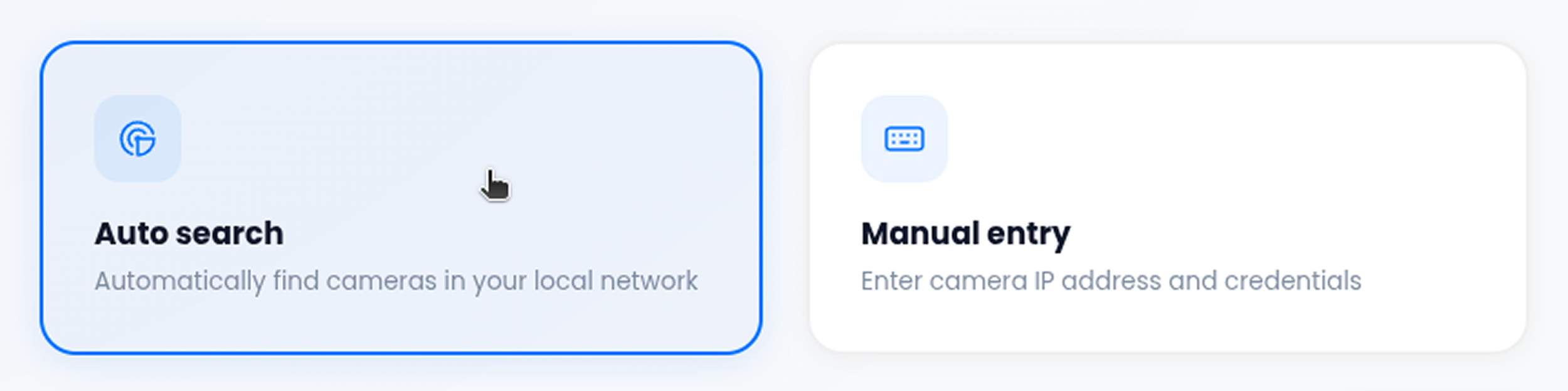
1. Add any camera
from almost any vendor
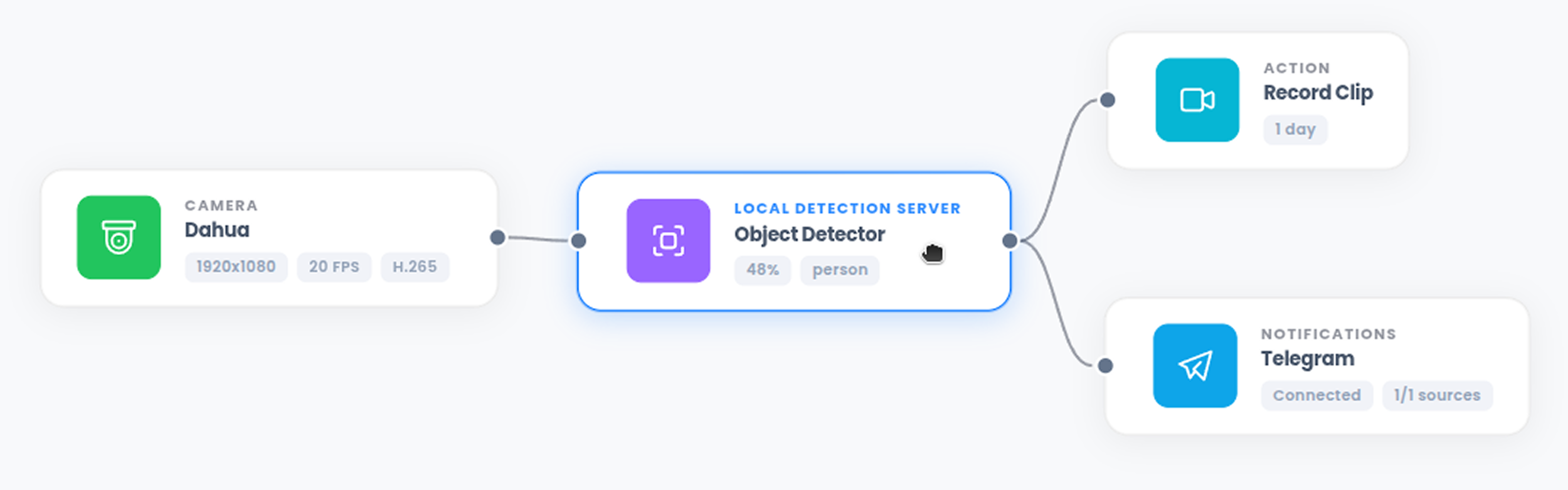
2. Create workflow without coding
by using visual drag and drop builder
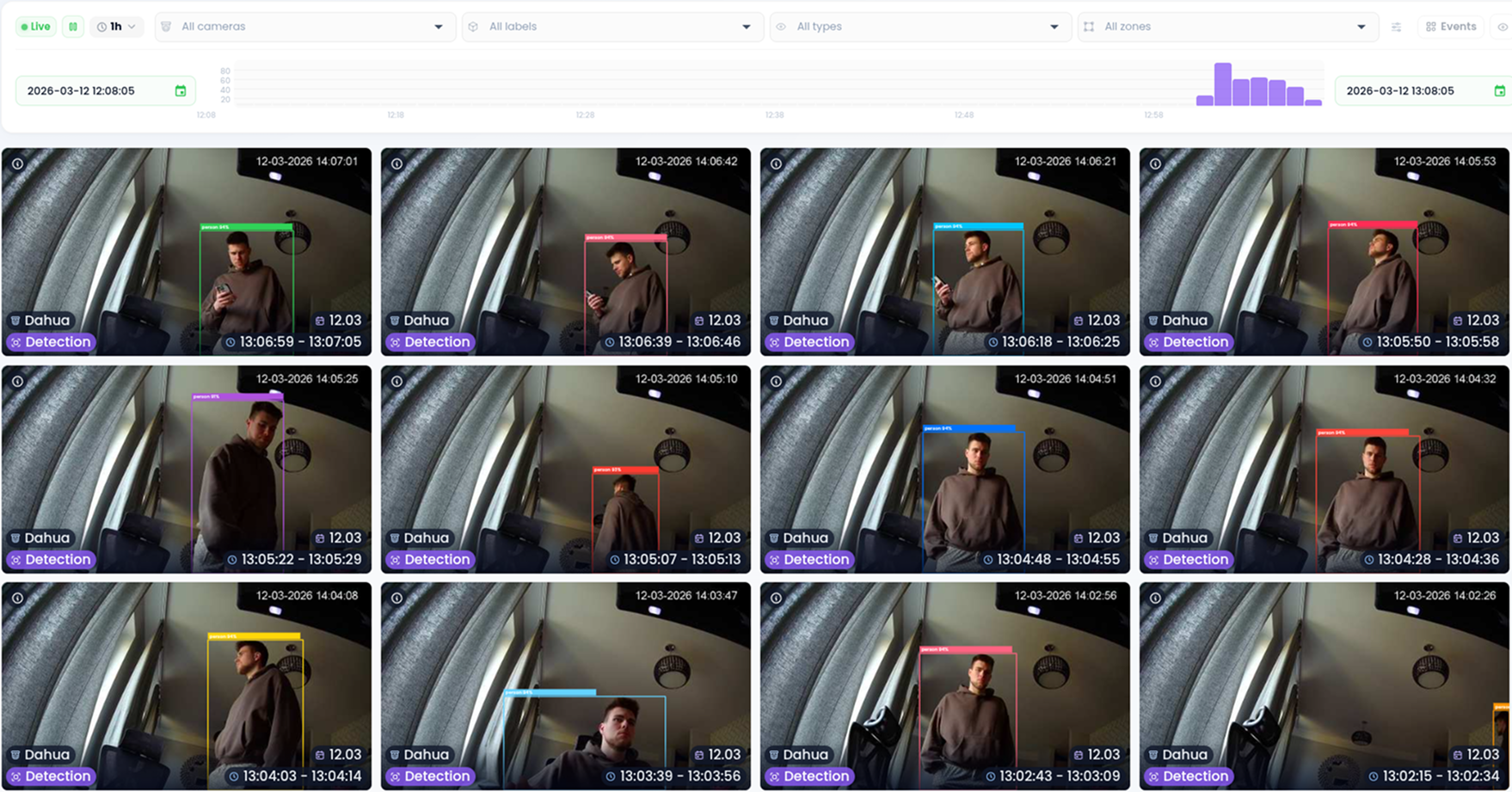
3. Check detections and events
all in one place
One platform, full control
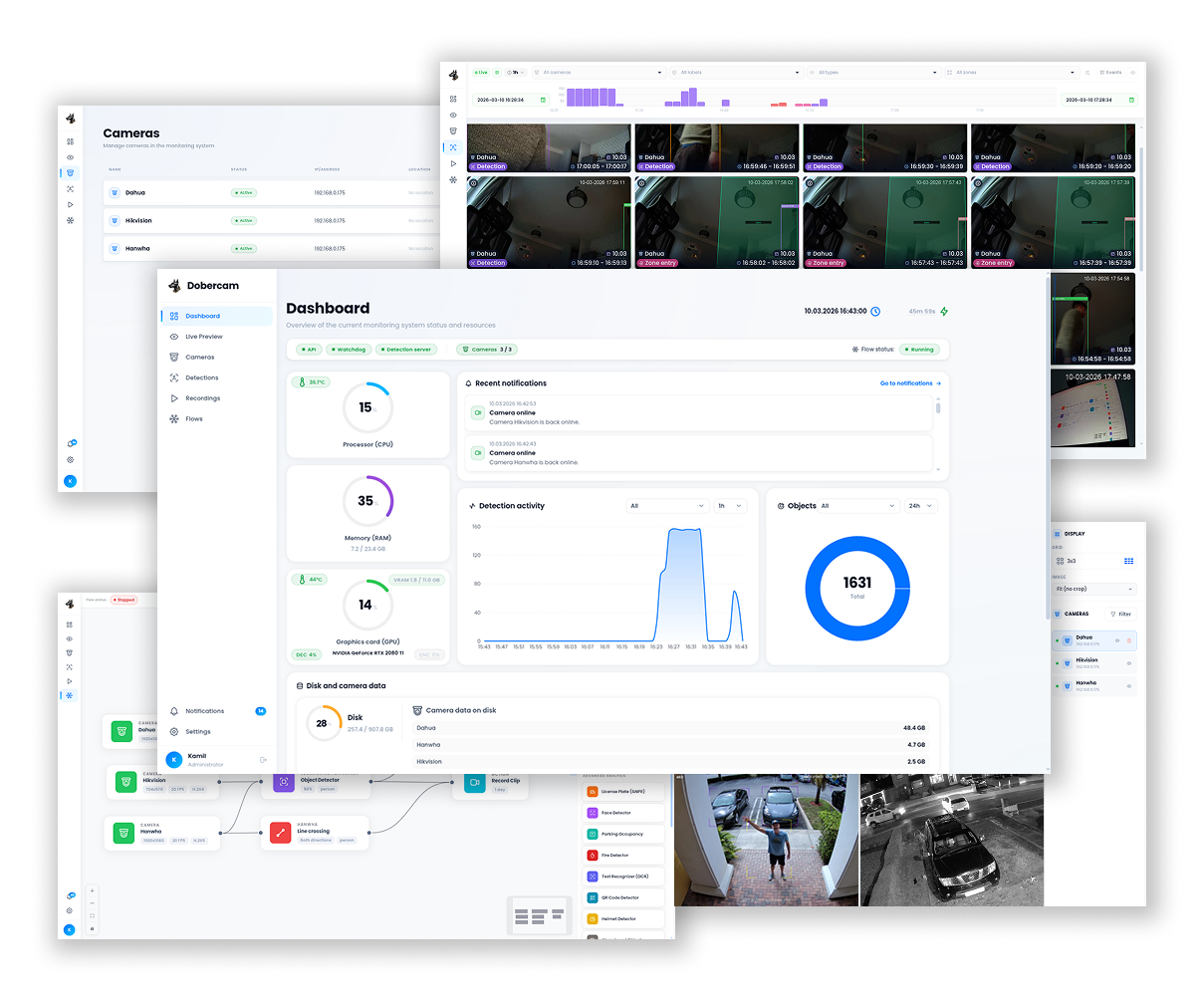
Dobercam is more than video analytics - it is a complete Video Management System built for intelligent monitoring.
Alongside advanced AI analysis, the platform provides everything needed to operate a modern surveillance system: live camera preview, recording and playback, camera management, a centralized dashboard with system and detection metrics, and an event browser with a visual timeline for reviewing incidents.
With its visual no-code workflow builder, you can create independent video processing scenarios for almost every camera, defining how footage is analyzed, which events trigger actions, and how the system reacts.
AI features built in, not bolted on
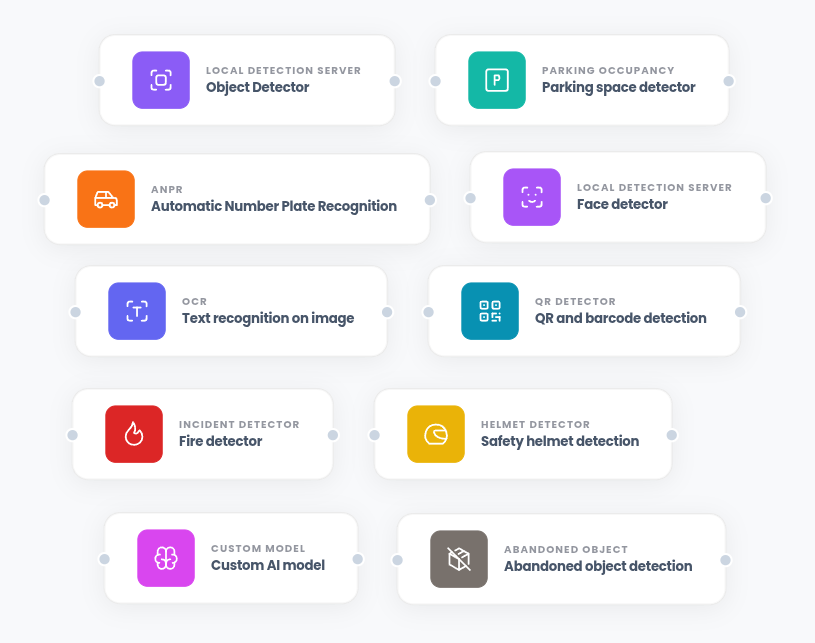
In many video management systems, AI analytics is still delivered as a separate modules or an optional upgrade. Dobercam was built differently - with AI integrated directly into the foundation of the platform.
By using modern deep learning models capable of interpreting complex visual scenes, the system can reliably detect people, objects, vehicles, and animals, as well as perform tasks such as incident detection or license plate recognition as part of automated monitoring workflows.
Because the platform is modular, new AI models and analytical capabilities can be added over time. Future versions will also allow users to import their own trained models and integrate them into monitoring scenarios.
Cameras detect, systems react
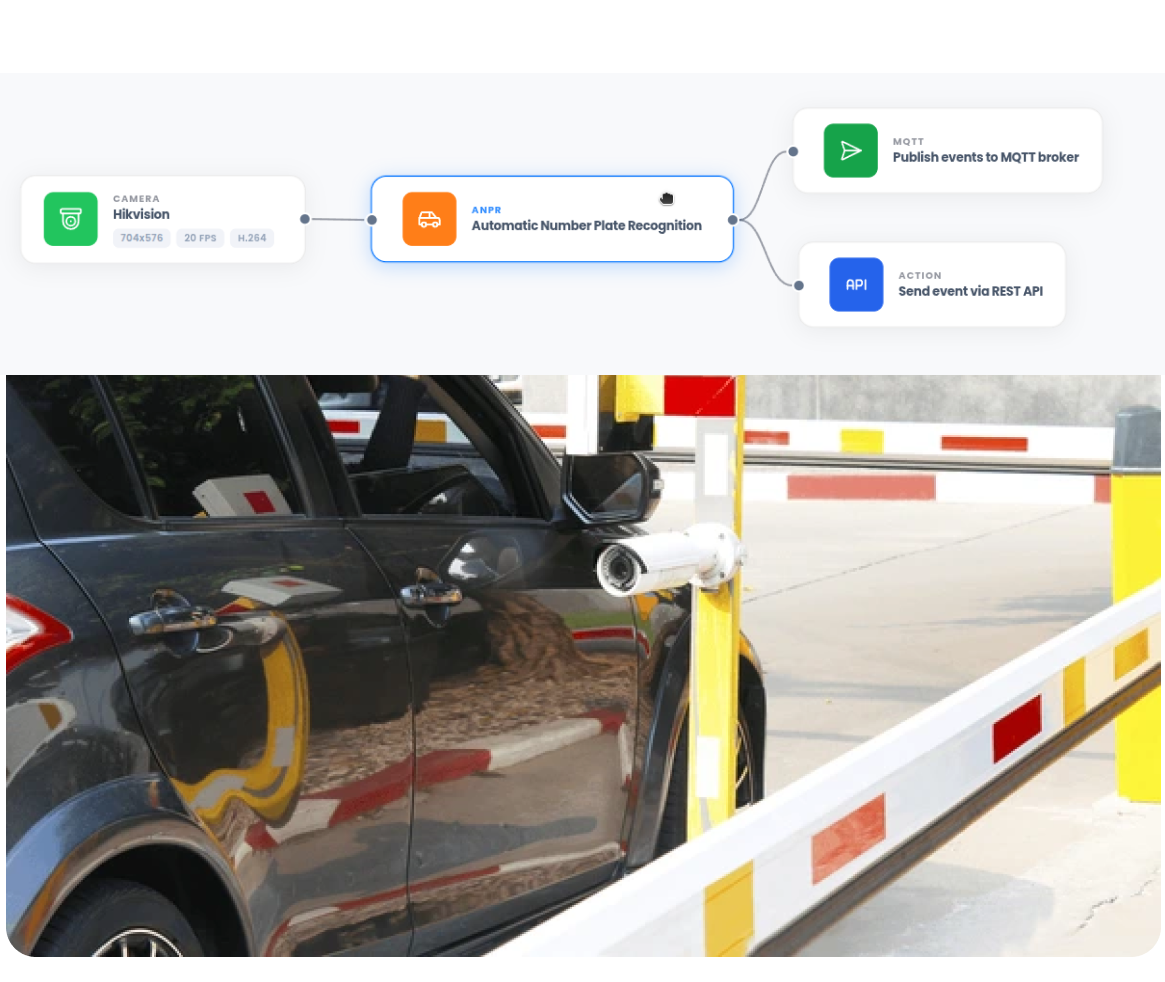
Camera detections can extend beyond the monitoring system itself. Using MQTT and REST APIs, the platform can integrate with smart home platforms, building automation systems, and other external services.
Detected events - including people, vehicles, or license plates - can trigger automated responses across connected systems, enabling actions such as lighting control, gate access, alert notifications, or execution of custom automation workflows in real time.
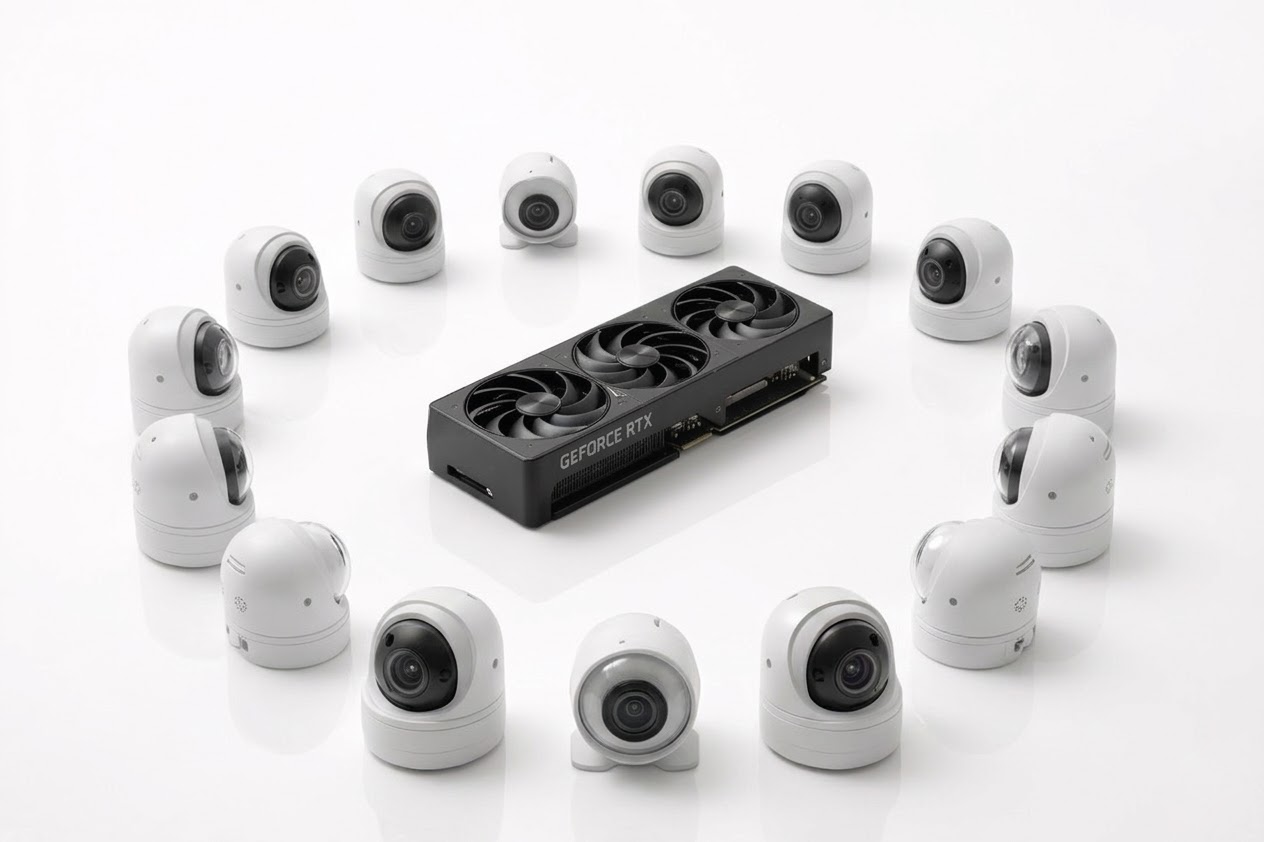
One GPU, dozens of cameras
Dobercam takes advantage of NVIDIA hardware-accelerated video decoding, allowing dozens of video streams to be processed simultaneously without overloading the CPU. In practice, a single consumer-grade GPU such as an RTX card can handle more than 30 Full HD camera streams at once.
AI analytics run on the GPU as well and are shared across multiple cameras, making it possible to scale intelligent video analysis while using the same server infrastructure.
On-premise or in the cloud
Dobercam can run on your existing on-premise servers, inside your own cloud environment (BYOC), or on dedicated hardware prepared for the deployment.
Regardless of the deployment model, video data always stays under your control and is processed within infrastructure managed by your organization.

Monitoring without GDPR risk
User role control, retention policies, and the ability to process data exclusively on the customer’s side - combined with face masking mechanisms - help protect privacy and meet legal requirements without complicating everyday operations. It’s monitoring designed to stay compliant, without workarounds or compromises.
Interested? Try Dobercam
Dobercam is currently available in Early Access for selected organizations.
The platform is currently looking for early design partners interested in testing it in real deployments and helping shape the future of intelligent video monitoring.
Leave your contact details to discuss your use case and request access to the platform. Responses are typically sent within 1 hour during business hours.
Questions? Check FAQ
General questions
-
Dobercam is designed for system integrators, security professionals, and organizations that need flexible and programmable video monitoring systems.
-
Traditional VMS platforms focus mainly on live preview, recording and playback.
Dobercam extends this model by allowing users to design programmable monitoring scenarios where video streams, AI analysis, events, and automated actions can be combined in visual workflows. -
No. Monitoring scenarios can be created using a visual flow editor without writing code.
Advanced integrations and automations can still be implemented through APIs when needed.
Infrastructure questions
-
Dobercam works with IP cameras that support the ONVIF standard and provide RTSP video streams using common codecs such as H.264 and H.265. This includes most professional surveillance cameras available on the market.
-
Yes. Dobercam is designed to work with cameras from multiple vendors
-
The number of supported cameras depends on several factors such as video codec, resolution, frame rate, enabled AI models, and the GPU used for processing.
As a general reference, servers equipped with a single NVIDIA RTX-series GPUs can typically handle around 30 cameras in common Full HD deployments, although the exact capacity may vary depending on the workload. -
Dobercam requires a server equipped with an NVIDIA GPU (minimum recommended: RTX 2060 with 6GB VRAM) for video decoding and AI processing.
The host system must support hardware virtualization and containerized workloads, as Dobercam is deployed as a Linux-based containerized environment.
Exact hardware requirements depend on the number of cameras, resolution, frame rate, and enabled analytics. -
Currently no. Dobercam uses GPU-accelerated video decoding (NVDEC) and shared AI inference to efficiently process multiple video streams on a server.
Future versions are planned to include software-based video decoding, which will allow the system to run on CPU-only servers.
-
No. Dobercam can operate entirely within a local network.
Internet access is only required for optional features such as external integrations, or notification services.
-
Currently no. Only vertical scaling is supported in the Early Access version.
Support for distributed and multi-node deployments is planned for future releases. Video decoding and AI processing can already utilize multiple GPUs within the same server instance, allowing the system to handle more camera streams and run additional AI models.
Platform questions
-
Currently available detection tools include object detection, line crossing detection, and zone entry detection.
The platform also includes core VMS features such as live video preview, recording and playback, a detection browser for reviewing AI events, a visual no-code workflow builder, and a dashboard with basic system and detection statistics.
-
Currently no. Custom AI model support is planned as part of the platform roadmap and is currently under active development.
Meet the founder

Kamil Bugla
Fullstack Developer
Hi, I'm Kamil.
I am a fullstack developer with over five years of experience building data-intensive software systems. My work has focused primarily on developing AI-driven solutions for video platforms, as well as systems for large-scale data processing and analytics.
I have worked on architectures for both real-time and on-demand video analysis, distributed data pipelines, and scalable data processing platforms.
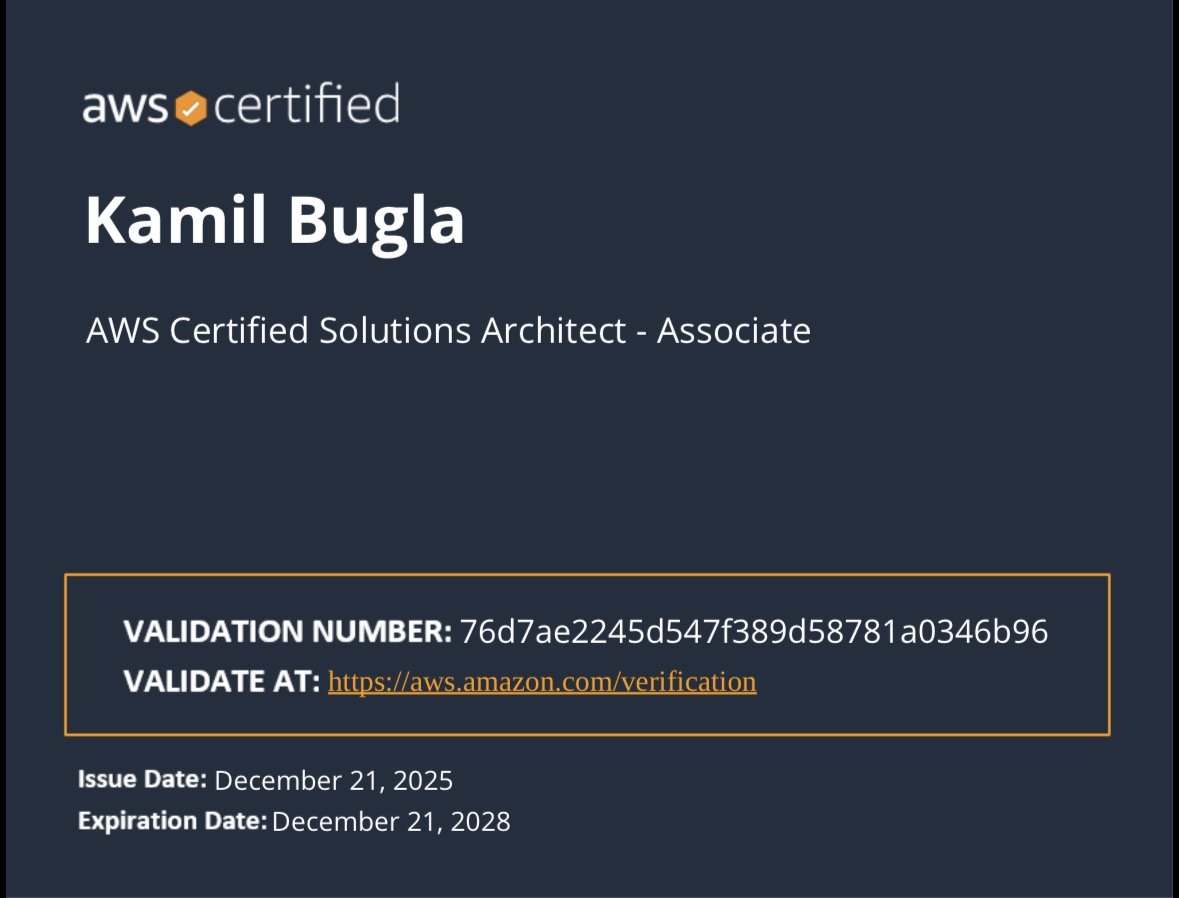
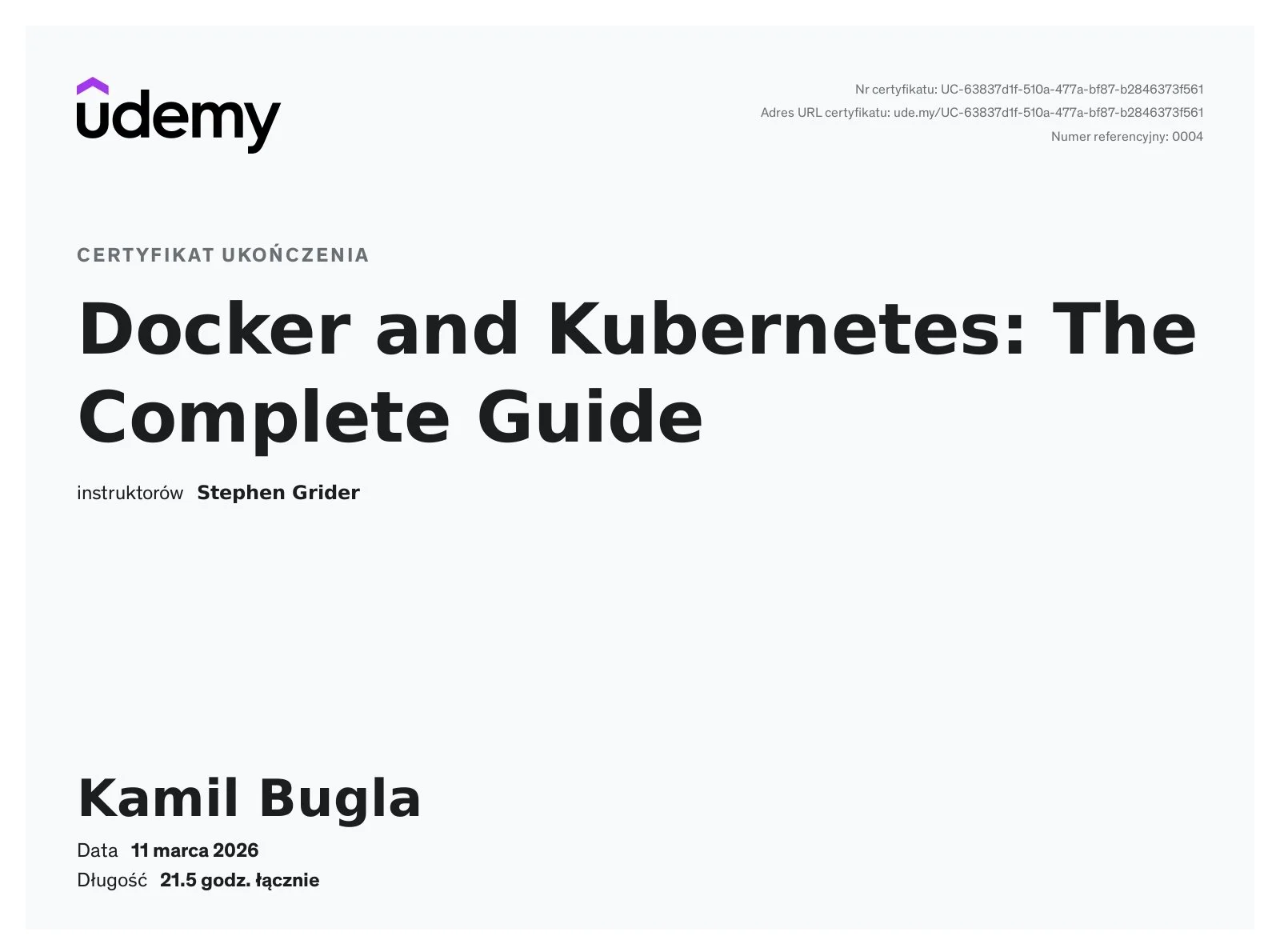
I hold two cloud certifications: Google Cloud Professional Data Engineer and AWS Solutions Architect Associate and have hands-on experience designing cloud solutions.
With Dobercam, I'm combining these areas to build a programmable video monitoring platform where AI models, GPU-accelerated video processing, and automation workflows are built directly into the system architecture.
I'm currently interested in connecting with security system integrators, companies using video monitoring systems, and early design partners interested in exploring new approaches to video analytics and monitoring workflows.